5 Autumn Routine Shifts That Quietly Affect Thyroid Energy
Quick Answer: Autumn commonly brings a dip in energy for people managing thyroid conditions, and the usual causes are routine changes rather than a change in the condition itself: less morning daylight, a shift to coffee and iron-rich comfort foods near medication time, colder mornings reducing movement, and later, heavier evening meals. Levothyroxine needs an empty stomach and a 30 to 60 minute gap before food, coffee, calcium, or iron - and autumn routines are exactly what tends to break that gap.
Here are five shifts worth checking, one at a time. Anything persistent belongs with your doctor - this is general information, not medical advice.

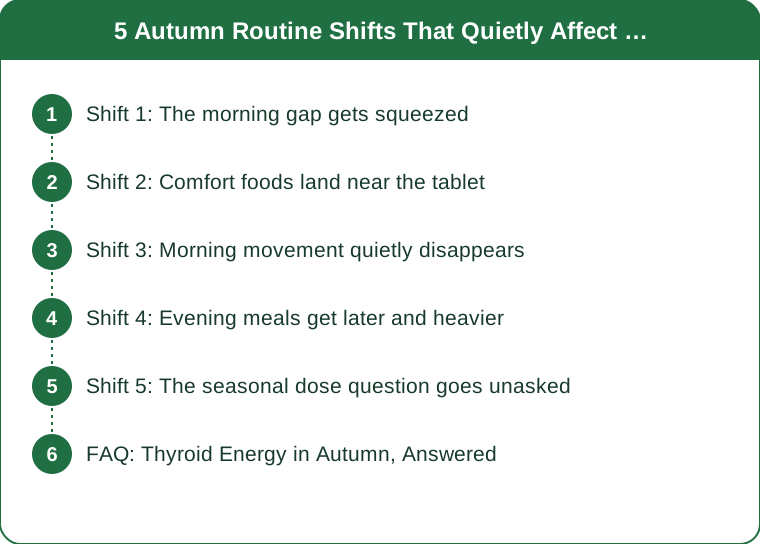
Shift 1: The morning gap gets squeezed
Darker mornings push everything later, and the medication gap is usually what gets sacrificed. Levothyroxine absorbs best on an empty stomach with a 30 to 60 minute wait before coffee or breakfast, and a rushed autumn morning quietly compresses that to ten minutes.
Coffee is the most common offender specifically because it moves earlier in the routine when mornings are cold. Taken close together, coffee can meaningfully reduce absorption, and the effect shows up as a gradual afternoon flatness rather than anything dramatic.
The fix is to decouple the two entirely: keep the tablet and a glass of water on the bedside table and take it on waking, before you get up. The gap then runs while you shower and dress, and nothing has to be remembered.
Shift 2: Comfort foods land near the tablet
Autumn breakfasts get heavier, and several of them interfere. Fortified cereals, porridge with milk, and iron-rich foods all contain calcium or iron, which bind levothyroxine and reduce absorption when taken close to the dose.
Supplements shift too. Vitamin D with calcium and iron supplements are commonly started as the days shorten, and both need a 4 hour separation from thyroid medication rather than the 30 to 60 minutes that food requires.
Keep the tablet early and move everything else later. Calcium and iron supplements sit best at lunch or with the evening meal, which preserves both their benefit and the medication’s absorption without any real inconvenience.
Shift 3: Morning movement quietly disappears
The pre-work walk is the first thing cold weather deletes, and for thyroid-related fatigue it was doing more than its ten minutes suggested. Light activity in the morning supports both circulation and the body clock signal that structures energy across the day.
Daylight is the larger half of that loss. Morning outdoor light, even under heavy cloud, is far brighter than any indoor lighting and is the main input that sets alertness timing.
Aim for 10 minutes outdoors before 9am, whatever the weather. Dress for it in advance so the decision is already made - laying the coat and shoes by the door the night before removes the point at which the habit usually fails.

Shift 4: Evening meals get later and heavier
Autumn meals drift later, and late heavy eating disrupts sleep quality - which then reads as thyroid fatigue the following afternoon. The connection is easy to miss because the symptom appears a day after the cause.
Sleep is where much of the fatigue picture is actually decided. Poor sleep produces cognitive fog and afternoon heaviness that closely resemble under-treatment, which is why it is worth ruling out before assuming anything about your dose.
Finish eating about 3 hours before bed where you can, and keep the evening meal substantial but not enormous. If dinner has to be late, making it lighter is more effective than moving it slightly earlier.
Shift 5: The seasonal dose question goes unasked
Thyroid hormone requirements can shift with the seasons for some people, and colder months are when it tends to come up. This is genuinely a conversation to have with your doctor rather than something to adjust yourself.
Bring evidence rather than impressions. A two-week log of energy, sleep hours, medication timing, and the actual gap before coffee is far more useful in a ten-minute appointment than a general sense of feeling worse.
Fix the routine factors first, then review. Two weeks of a protected medication gap, morning light, and consistent sleep removes most of the confounders, so what remains is genuinely worth investigating. Any persistent change in symptoms deserves proper medical assessment - this is general information, not medical advice.
FAQ: Thyroid Energy in Autumn, Answered
Why does my energy dip in autumn even though nothing changed?
Usually because the routine around the medication changed - less morning daylight, coffee closer to the tablet, less movement, and later meals. Each is small; together they are noticeable.
How long should I wait after levothyroxine before coffee or breakfast?
30 to 60 minutes. Keeping the tablet and a glass of water by the bed and taking it on waking makes the gap happen automatically.
What about calcium and iron supplements?
They need a longer separation - around 4 hours. Moving them to lunch or the evening meal preserves both their benefit and your medication’s absorption.
Does morning light genuinely help?
It helps set the body clock that structures daily alertness. Ten minutes outdoors before 9am, even under cloud, is far brighter than indoor lighting and costs nothing.
Could I need a different dose in winter?
Possibly - requirements shift seasonally for some people. That is a conversation for your doctor, ideally with a two-week log of symptoms, sleep, and medication timing.
Is afternoon fog always a thyroid issue?
No. Short or fragmented sleep produces very similar symptoms, which is why it is worth addressing sleep before drawing conclusions about your dose.
What should I try first?
Protect the morning gap for two weeks. It is the highest-value change and the one autumn routines most reliably break.
TL;DR:
- Protect the medication gap - 30 to 60 minutes before coffee or food. Keep the tablet by the bed and take it on waking.
- Calcium and iron need 4 hours of separation, so move those supplements to lunch or dinner.
- 10 minutes of outdoor light before 9am, whatever the weather. Set the coat out the night before.
- Finish eating around 3 hours before bed; if dinner must be late, make it lighter rather than earlier.
- Rule out sleep first. Fragmented sleep mimics under-treatment closely.
- Log two weeks of symptoms, sleep, and timing before any appointment - it makes the conversation far more useful.
Any persistent change in symptoms deserves proper medical assessment. This is general information, not medical advice.
Keep Reading
This article is for general informational purposes only and is not medical advice. Always consult a qualified health professional for guidance specific to you.