5 Back-to-School Season Habits That Keep Thyroid Energy Steady
Quick Answer: The back-to-school weeks reshuffle wake times, breakfasts, and evening routines — and thyroid medication depends on all three being consistent. The five habits below protect absorption and energy through the transition: a fixed dosing anchor, a protected 30 to 60 minute gap before food, a calcium and iron audit, a stable lunch time, and a wind-down that survives the new schedule.
Energy drops in September and it gets blamed on the season. Some of it is. A lot of it is a routine that moved by forty minutes and took the medication with it.
Here are five specific things to hold steady.

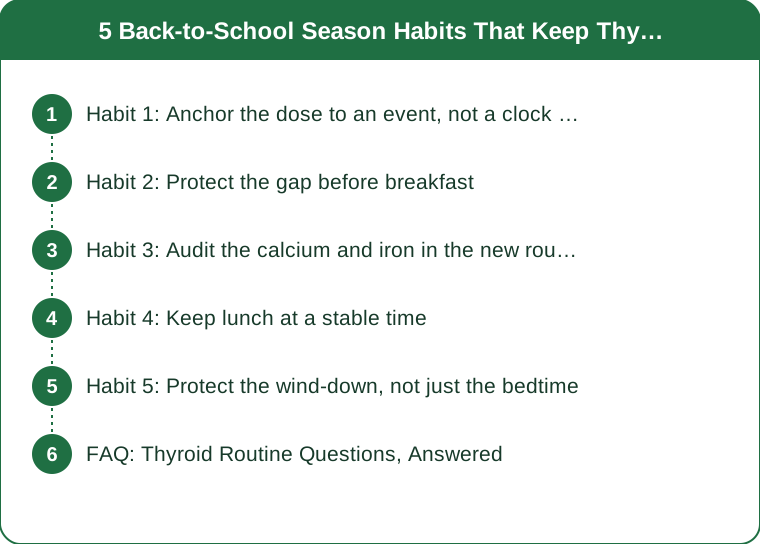
Habit 1: Anchor the dose to an event, not a clock time
When the household wake time shifts, a medication set for 6:40am quietly becomes whenever-you-remember. The fix is to attach the dose to something that happens regardless of what time it happens.
Attach it to the first glass of water, before anything else. Not to an alarm, not to a time. The action becomes: feet on floor, water, tablet, then the day starts. That sequence survives a schedule change because it is defined by order rather than by hour.
Levothyroxine absorption is best on an empty stomach with water, and consistency matters more than the specific hour. A dose taken at 6:00 every day and a dose taken at 7:30 every day both work. A dose that moves between them does not, because the surrounding conditions move with it.
If mornings are genuinely chaotic in term time, bedtime dosing is an established alternative worth raising with your doctor — same principle, calmer part of the day.
Habit 2: Protect the gap before breakfast
The 30 to 60 minute window between the tablet and food is where most real-world absorption is lost, and it is the first thing a busy morning eats into.
Food in the stomach reduces levothyroxine absorption meaningfully, and coffee is particularly disruptive — studies have shown espresso taken with or shortly after the dose can reduce absorption noticeably. That is a real cut in the dose you thought you took.
Practical protection during term time:
- Take the tablet, then do the thing that takes 30 minutes anyway — shower, get children ready, walk the dog
- Set the coffee machine to start 45 minutes after your usual dose time rather than immediately
- If breakfast has to be early, move the dose to bedtime instead of shrinking the gap
A shrinking gap is the most common reason someone stable in July feels flat in September with unchanged labs.
Habit 3: Audit the calcium and iron in the new routine
New season, new supplements, new breakfast, new coffee order — and several of them interfere.
Calcium and iron require a four-hour separation from levothyroxine, not thirty minutes. They bind the medication in the gut and reduce absorption substantially.
What people add in September without thinking about it:
- A fortified breakfast cereal or a calcium-fortified plant milk in the morning coffee
- An iron supplement started because of tiredness — which is exactly the wrong time to add it
- A multivitamin moved to mornings as part of a new routine
- Calcium-containing antacids for the stress-related reflux the new term brings
Move all of them to the afternoon or evening. It is a five-minute audit that resolves a surprising number of unexplained energy dips.

Habit 4: Keep lunch at a stable time
This one gets overlooked because it is not about the medication at all. It is about blood sugar, and thyroid fatigue and blood sugar dips are very hard to tell apart from the inside.
Term-time schedules push lunch later and make it more variable — a 12:30 lunch on Monday and a 2:15 lunch on Tuesday. That variability produces an afternoon energy pattern that looks exactly like the thyroid symptom you are watching for, which makes it hard to tell whether anything is actually wrong.
Aim for lunch within a 45-minute window each day, with protein in it. The point is not nutritional perfection — it is removing a confounding variable so that if you do feel worse, you can trust the signal.
If you cannot control the timing, keep a consistent mid-morning snack so the gap never runs long. A stable input makes an unstable schedule readable.
Habit 5: Protect the wind-down, not just the bedtime
The autumn schedule pushes evenings later — activities, homework, darker mornings requiring earlier alarms. Sleep gets compressed from both ends.
Thyroid symptoms and sleep debt overlap almost completely: fatigue, cold intolerance, low mood, brain fog. Under-sleeping for three weeks will produce a symptom picture that looks like a dose problem and is not.
What to hold:
- A fixed wind-down start time, even if bedtime varies. Thirty minutes of lights-down before bed does more than an earlier bedtime you do not keep.
- No caffeine after early afternoon. Fatigue makes late caffeine tempting and it deepens the hole.
- Keep the bedroom cool. Cold intolerance can make people overheat the room, which fragments sleep further.
If you are tracking symptoms to discuss with your doctor, note sleep hours alongside them. Without that column, the data is very hard to interpret.
This is general information, not medical advice. Persistent fatigue, weight change, or new symptoms warrant a conversation with your doctor and appropriate testing rather than routine adjustments.
FAQ: Thyroid Routine Questions, Answered
Does it matter if I take my dose at a different time on weekends?
A little. Consistency of conditions matters more than consistency of the clock, but a two-hour weekend shift with a different breakfast pattern introduces variability. Keeping the sequence — water, tablet, gap — is the part to hold.
I missed a dose during a busy week. What should I do?
Follow the guidance you were given when it was prescribed, and ask your pharmacist if you are unsure. Do not double up on your own initiative. One missed dose in a stable person is generally not a crisis given the long half-life, but the answer depends on your specific situation.
Why do my labs look fine when I feel worse in autumn?
Several reasons can coexist: seasonal light change affecting mood and energy, sleep compression from a new schedule, and absorption changes from a shifted routine. Normal labs with persistent symptoms is a recognised and frustrating situation, and it is worth discussing rather than accepting.
TL;DR:
- Anchor the dose to an action — water first thing — rather than to a clock time that a new schedule will move.
- Protect the 30 to 60 minute gap before food and coffee; a shrinking gap is a real dose reduction.
- Separate calcium and iron by four hours, and audit anything new added for autumn.
- Stabilise lunch timing and protect the wind-down, so sleep and blood sugar stop confounding the picture.
Pick the one that moved most in your household this month and fix that first. The others can follow next week.
Keep Reading
This article is for general informational purposes only and is not medical advice. Always consult a qualified health professional for guidance specific to you.