5 Daily Signs Your Thyroid Might Need Attention (That Aren't Just 'Being Tired')
Quick Answer: Beyond generic fatigue, specific signs like unexplained temperature sensitivity, changes in hair texture, and shifts in bowel regularity are more distinctive thyroid signals worth mentioning to a doctor and tracking over a few weeks.
Fatigue gets blamed on everything, which makes it a poor stand-alone signal. These five more specific patterns are worth paying closer attention to.

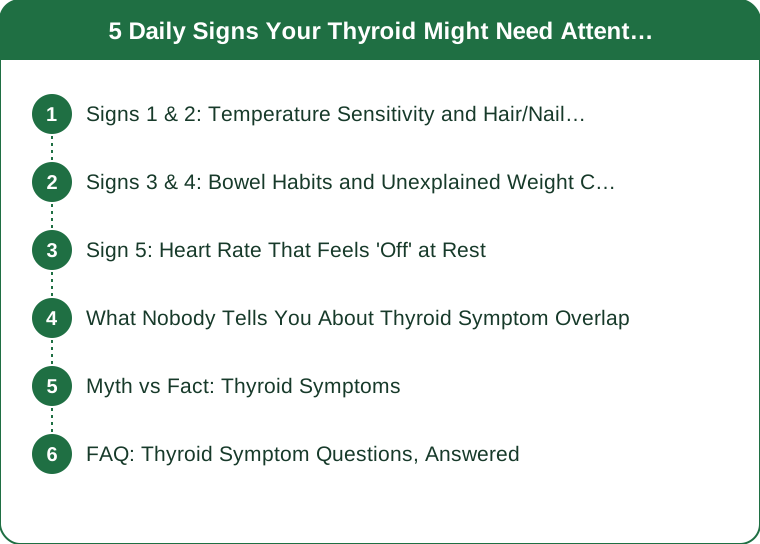
Signs 1 & 2: Temperature Sensitivity and Hair/Nail Changes
Sign 1: Temperature sensitivity that doesn’t match the room
Feeling persistently cold when others in the same room are comfortable (hypothyroid pattern), or running unusually warm and sweating easily (hyperthyroid pattern), is a more specific signal than general fatigue because it reflects the thyroid’s direct role in regulating metabolic rate and body temperature. Track this for two weeks: note your comfort level relative to people around you in the same environment, not just how you feel in isolation.
Sign 2: Hair and nail texture changes
Thyroid hormone directly affects hair follicle cycling and nail growth — thinning hair (especially at the outer third of eyebrows), unusually brittle nails, or noticeably drier hair texture over a few months are specific enough to be worth mentioning at a checkup, distinct from normal seasonal hair shedding.
Signs 3 & 4: Bowel Habits and Unexplained Weight Change
Sign 3: Bowel habit changes without diet changes
Persistent constipation (hypothyroid) or unexplained looser, more frequent bowel movements (hyperthyroid) that show up without any change in diet or routine can reflect thyroid hormone’s role in regulating digestive motility, and are more specific than generalized digestive discomfort.
Sign 4: Unexplained weight change despite stable habits
Weight gain or loss that happens without a corresponding change in eating or activity patterns is worth investigating, since thyroid hormone directly affects metabolic rate — this is different from typical weight fluctuation tied to visible lifestyle changes.
Sign 5: Heart Rate That Feels ‘Off’ at Rest
A resting heart rate that feels unusually slow (bradycardia, hypothyroid pattern) or a racing, pounding heartbeat at rest without exertion (hyperthyroid pattern) is a distinctive enough symptom to track with a simple pulse check or wearable device over a couple of weeks.

What Nobody Tells You About Thyroid Symptom Overlap
Many thyroid symptoms overlap heavily with stress, perimenopause, and depression, which is exactly why doctors rely on blood tests (TSH, free T4) rather than symptoms alone for diagnosis. Tracking specific, measurable signs like the ones above — rather than vague ‘I feel off’ — gives a doctor much more useful information to act on.
Myth vs Fact: Thyroid Symptoms
Myth: Thyroid problems always cause dramatic, obvious symptoms. Fact: subclinical or early thyroid dysfunction often causes subtle changes that build gradually over months, which is why tracking specific signs over time matters more than a single day’s symptom check. Myth: Only women need to worry about thyroid issues. Fact: thyroid conditions are more common in women, but men experience the same underlying dysfunction and symptoms, sometimes with delayed recognition because it’s less commonly suspected.
FAQ: Thyroid Symptom Questions, Answered
How is a thyroid problem actually diagnosed?
A blood test measuring TSH, and often free T4, is the standard first step — symptoms alone are not sufficient for diagnosis given the overlap with other conditions.
Should I ask for a thyroid test if I have just one of these signs?
One isolated, mild sign may not warrant urgent testing, but two or more persistent signs together, especially alongside fatigue, are reasonable grounds to request screening at a routine visit.
Can thyroid symptoms come and go?
Hashimoto’s thyroiditis and other autoimmune thyroid conditions can cause fluctuating symptoms as hormone levels swing, which is different from the steadier pattern of a fully established under or overactive thyroid.
TL;DR:
- Temperature sensitivity relative to others is more specific than general fatigue
- Hair, nail, and bowel changes without lifestyle changes are worth tracking
- Unexplained weight change and resting heart rate shifts are distinctive signals
- Two or more persistent signs together are reasonable grounds to request a blood test
This is general information, not medical advice — persistent or multiple signs are worth bringing to a doctor for proper blood testing rather than self-diagnosing.
Keep Reading
This article is for general informational purposes only and is not medical advice. Always consult a qualified health professional for guidance specific to you.