5 Late Summer Heat Habits That Protect Thyroid Energy
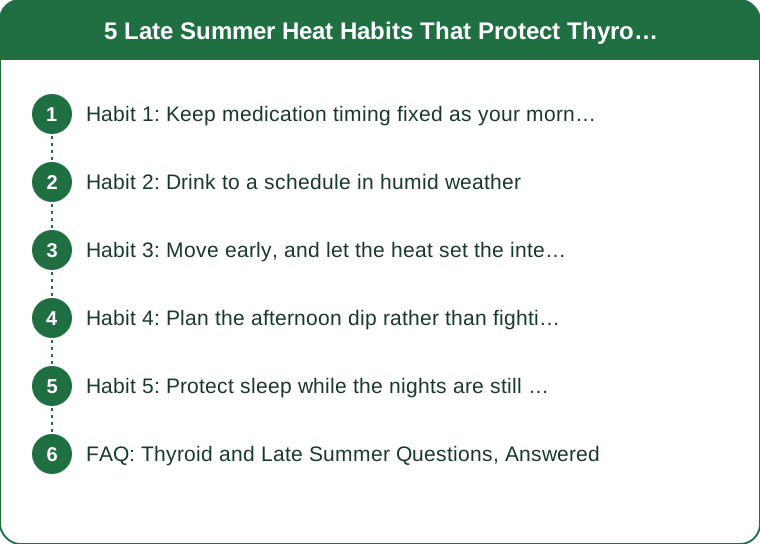
Quick Answer: Late summer brings three things that interact with thyroid symptoms — heat that adds to fatigue, humidity that affects appetite and hydration, and a schedule shifting toward autumn routines. These five habits target the specific overlaps: medication timing around changed morning routines, hydration in humid weather, heat-tolerant movement, an afternoon energy plan, and sleep as nights stay warm. Each takes minutes and fits into a normal day.
This is general information, not medical advice — dose and treatment decisions belong with your doctor.

Habit 1: Keep medication timing fixed as your morning routine shifts
The single most important habit on this list, and the one most disrupted by a change of schedule.
Levothyroxine absorption is affected by food, coffee, calcium, and iron. The standard guidance is to take it on an empty stomach with water, and to wait before eating or drinking coffee. Consistency matters as much as the specific timing — the same routine every day gives stable levels, which is what your dose was adjusted to.
Late August is when routines break. School starts, work schedules change, holidays end, and mornings that were leisurely become rushed. The medication that was taken at 6:30 with a clear stomach starts getting taken at 7:15 with breakfast, and the change is invisible until symptoms drift weeks later.
What to do:
Anchor it to waking rather than to the clock. Bedside, with a glass of water, taken before anything else. This survives a changing schedule in a way that a fixed time does not.
Protect the gap before coffee. Coffee meaningfully reduces absorption when taken too soon.
Watch calcium and iron supplements specifically — these need substantial separation, several hours rather than minutes.
If mornings genuinely will not work, talk to your doctor about consistent evening dosing. It is an option for some people, and it is a decision to make with your prescriber, not alone.
Set the reminder now, before the new routine settles. Habits formed in the first week of a new schedule are the ones that stick.
Habit 2: Drink to a schedule in humid weather
Humidity changes fluid needs and blunts the cues that normally prompt drinking.
Sweat that does not evaporate still costs you fluid. In humid air, sweat runs off rather than cooling you, so you lose the fluid and gain less of the benefit — which means higher losses for the same activity.
Thirst is an unreliable guide. It lags behind actual deficit, and it is easily overridden by a busy day.
Why this matters for thyroid symptoms specifically: dehydration produces fatigue, headache, difficulty concentrating, and constipation. Every one of those overlaps with hypothyroid symptoms, which makes it genuinely hard to tell whether a bad week is thyroid-related or simply a hydration problem.
Constipation is worth naming. It is a common hypothyroid symptom, and dehydration makes it worse. In a humid week with higher fluid losses, the two compound, and the fluid side is the one you can fix today.
What to do:
A glass of water with each meal and one between, as a baseline structure rather than a target volume.
Check morning urine colour — pale straw is the goal, and consistently dark first thing is worth acting on.
Add electrolytes only for genuinely long or hot activity, not routinely.
Watch caffeine timing, which matters for both hydration and for medication absorption.
Keep a bottle visible. The simplest interventions are the ones that work, and a bottle in sight is drunk while one in a bag is not.
Habit 3: Move early, and let the heat set the intensity
Exercise helps thyroid-related fatigue, and heat changes how much you can do without paying for it.
Movement genuinely helps. Regular moderate activity improves energy, mood, and sleep, and it is one of the more reliable things within your control.
Heat raises the cost of the same session. Cardiovascular strain rises in heat at any given pace, so a workout that felt manageable in spring may leave you flattened in humid August.
Fatigue that lasts into the next day is the signal to reduce intensity, and it is a useful marker regardless of the cause.
What to do:
Train in the morning while it is coolest. Late August mornings are noticeably cooler than afternoons, and morning movement also supports the circadian rhythm as daylight shortens.
Reduce intensity rather than duration in heat. A longer easy walk is more sustainable than a shorter hard session when conditions are difficult.
Swim or use air-conditioned spaces if outdoor conditions are genuinely limiting. Water-based exercise removes the heat problem entirely and is easy on joints, which matters if you have joint symptoms.
Build gradually. Consistency over months matters far more than any individual session.
Watch for the difference between ordinary tiredness and something more. New or worsening exercise intolerance, breathlessness, or palpitations is a reason to see your doctor, not to push harder.

Habit 4: Plan the afternoon dip rather than fighting it
The mid-afternoon energy drop is real for most people and more pronounced with thyroid symptoms, and heat amplifies it.
There is a genuine circadian dip in alertness in the early to mid afternoon, and it exists independently of lunch. A warm room, a heavy meal, and underlying fatigue turn a dip into a collapse.
What to do:
Eat a lunch built around protein and vegetables rather than a large carbohydrate-heavy meal, which tends to deepen the dip.
Get outside for ten minutes. Daylight exposure in the afternoon supports circadian rhythm and alertness, and it is more effective than a coffee. As daylight shortens through September this matters more, not less.
Move, even briefly. A few minutes of walking is a genuine alertness intervention.
Time caffeine deliberately. Early afternoon is usually fine; late afternoon caffeine affects sleep quality, which feeds back into the next day.
Cool down if you are hot. Cool water on the wrists and forearms, and a cooler room if possible. Heat-driven fatigue responds quickly to cooling in a way that other fatigue does not.
Schedule around it where you can. Put demanding work in the morning and routine tasks in the dip. This is a scheduling problem as much as a physiological one, and treating it as one takes the frustration out of it.
Habit 5: Protect sleep while the nights are still warm
Sleep is where energy is rebuilt, and warm late summer nights are one of the more solvable obstacles.
Sleep quality depends on core body temperature falling. The natural evening drop in core temperature is a signal for sleep onset, and a warm bedroom interferes with it directly.
Thyroid symptoms and poor sleep feed each other. Fatigue makes it harder to keep good routines, and poor sleep worsens fatigue.
Temperature regulation can feel different with thyroid conditions — cold intolerance is a common hypothyroid symptom, and heat intolerance can occur in the opposite direction. Neither means you should skip the basics of sleep hygiene, which help regardless.
What to do:
Cool the room before bed rather than during the night. Open windows in the evening when outdoor air has dropped below indoor temperature, and use a fan to move air.
A warm shower an hour before bed helps, counterintuitively, because it brings blood to the skin and accelerates the subsequent drop in core temperature.
Breathable bedding matters more than thread count. Cotton or linen over synthetics.
Keep wake time consistent even as evenings shift. Wake time anchors circadian rhythm more strongly than bedtime does, and as daylight shortens through September a consistent wake time with morning light exposure is the single best thing for energy.
Watch the transition into autumn. As daylight contracts, mood and energy dip for many people. Morning light exposure is the most evidence-supported response, and starting the habit now, before the change is severe, makes it easier to sustain.
If symptoms are worsening, if you have new symptoms, or if your energy has changed significantly, that is a reason to have your levels checked rather than adjust habits. Only your doctor can interpret that in context.
FAQ: Thyroid and Late Summer Questions, Answered
Does hot weather affect thyroid medication?
Store it as directed and avoid leaving it in a hot car or a steamy bathroom, since heat and humidity can affect stability. What matters more is consistent timing, which is the thing most disrupted by a changing summer schedule.
Why do I feel more tired in humid weather?
Heat and humidity add a thermoregulatory load on top of everything else, and dehydration is easier in humid conditions. Both produce fatigue that overlaps with thyroid symptoms, which makes them hard to tell apart.
Should I change my dose in summer?
Never on your own. Dose decisions are made by your doctor based on symptoms and blood tests. If you feel consistently different, that is a reason to be tested rather than to adjust anything.
When should I get my levels checked?
Follow your doctor’s schedule, and ask sooner if symptoms change noticeably — new fatigue, weight change, temperature intolerance, or mood changes. A changed routine that has disrupted medication timing is also a good reason to check.
TL;DR:
- Anchor medication to waking rather than the clock, so a changing autumn schedule does not quietly shift it.
- Drink on a schedule in humid weather; dehydration symptoms overlap heavily with thyroid symptoms.
- Move in the cool of the morning and let conditions set the intensity rather than the plan.
- Plan around the afternoon dip, and cool the bedroom before warm nights disrupt sleep.
Pick the one habit your current routine most obviously breaks, and start with that. This is general information, not medical advice.
Keep Reading
This article is for general informational purposes only and is not medical advice. Always consult a qualified health professional for guidance specific to you.