5 Ways Thyroid-Related Cold Intolerance Shows Up in Daily Life (And What Helps)
Quick Answer: An underactive thyroid slows your metabolic rate, which reduces the heat your body naturally generates, making cold intolerance one of the most common early hypothyroid symptoms — layering strategically and getting thyroid levels checked are the two most useful immediate steps.
Everyone else in the office is comfortable in short sleeves while you’re wrapped in a cardigan reaching for the space heater. If this is a consistent pattern, not just a one-off cold day, it’s worth paying attention to.

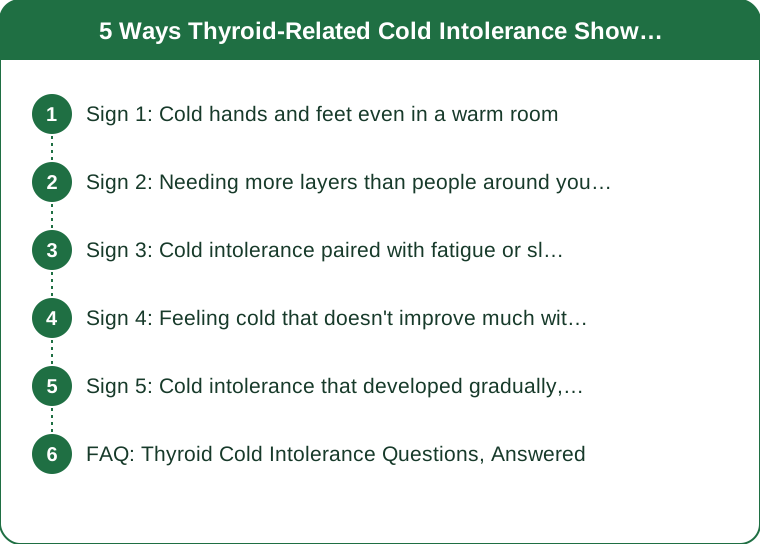
Sign 1: Cold hands and feet even in a warm room
Thyroid hormone helps regulate peripheral blood flow and metabolic heat production — when levels are low, blood vessels in the extremities constrict more to preserve core heat, leaving hands and feet consistently cold even when the room itself is comfortable.
Sign 2: Needing more layers than people around you consistently, not just occasionally
A one-off cold day is normal; a consistent pattern across weeks and different environments is the detail that distinguishes a possible thyroid connection from just personal preference or a lower body-fat percentage.
Sign 3: Cold intolerance paired with fatigue or slower digestion
Cold sensitivity rarely shows up alone in hypothyroidism — it typically appears alongside fatigue, constipation, or unexplained weight changes, since all of these stem from the same underlying slowed metabolic rate.

Sign 4: Feeling cold that doesn’t improve much with more clothing
Because the issue is reduced internal heat production, not just heat retention, piling on layers helps less than you’d expect compared to how effectively layering works for someone whose cold sensitivity is purely about insulation.
Sign 5: Cold intolerance that developed gradually, not suddenly
Thyroid-related changes are typically gradual over months, unlike an acute illness — if you can trace a slow shift rather than a sudden onset, that pattern is more consistent with a thyroid-related cause worth discussing with a doctor.

FAQ: Thyroid Cold Intolerance Questions, Answered
Is feeling cold alone enough to suspect a thyroid problem?
No — it’s one data point among several; a simple blood test (TSH, and often free T4) is the only way to actually confirm thyroid involvement, not symptoms alone.
Can thyroid-related cold intolerance be treated?
Yes — once diagnosed, thyroid hormone replacement therapy typically improves temperature regulation along with other symptoms, often within weeks of reaching a stable dose.
Should I try to warm up more or address the root cause?
Both — practical layering helps day-to-day comfort, but if the pattern is consistent and unexplained, addressing the underlying thyroid function is what actually resolves it long-term. This is general information, not medical advice.
TL;DR:
- Cold intolerance can stem from a slowed metabolic rate tied to thyroid function
- Watch for a consistent pattern, not just an occasional cold day
- It rarely appears alone — fatigue and digestive changes often come with it
- A simple blood test is the only way to confirm a thyroid connection If you’re the person who’s always cold no matter the season, it’s worth a conversation with your doctor rather than just buying another sweater.
Keep Reading
This article is for general informational purposes only and is not medical advice. Always consult a qualified health professional for guidance specific to you.