Thyroid and Hair Thinning: What's Actually Connected (and What Helps)
Quick Answer: Thyroid hormone directly regulates the hair growth cycle, so both an underactive and overactive thyroid can cause diffuse thinning — not bald patches, but overall lower density — and hair regrowth after treatment typically takes 3-6 months to become visible, even once labs normalize.
The hair loss showed up gradually enough that you almost didn’t connect it to anything. That’s typical — thyroid-related thinning rarely announces itself.

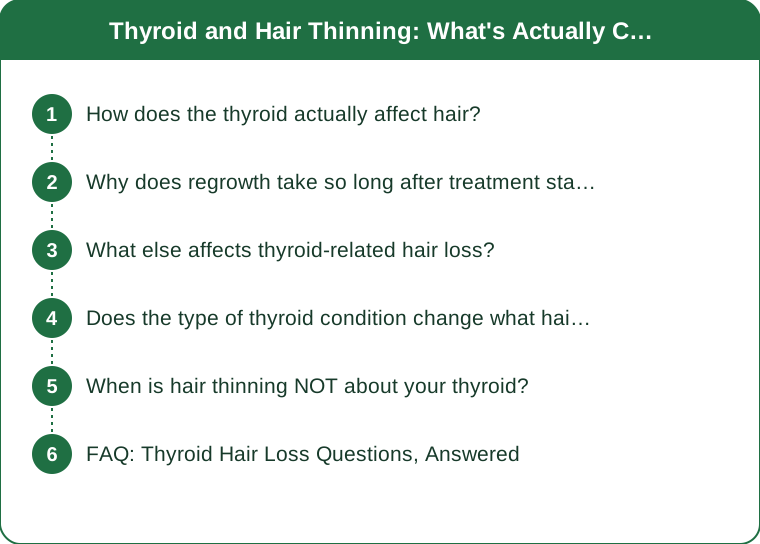
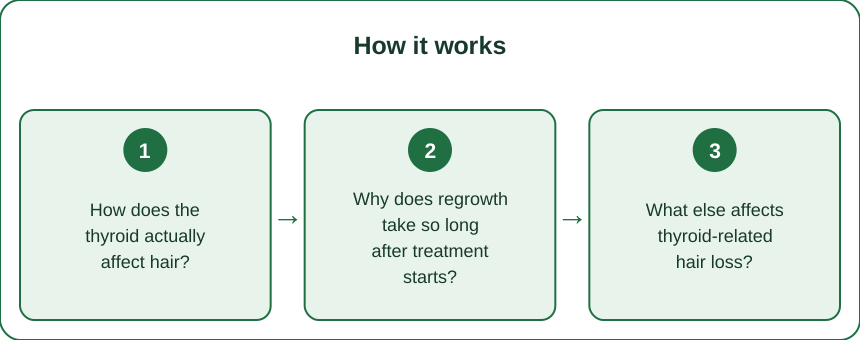
How does the thyroid actually affect hair?
Thyroid hormone regulates the hair follicle’s growth cycle directly. When levels are off — too low or too high — more follicles than normal shift into the resting phase at once, and resting follicles eventually shed.
This produces diffuse thinning across the whole scalp rather than patches, which is one way to distinguish it from other causes of hair loss. The shedding itself usually shows up 2-4 months after the hormone disruption started, not immediately — which is why the connection to a stressful lab result often gets missed entirely.
Why does regrowth take so long after treatment starts?
Hair that shifted into the resting phase doesn’t restart growing immediately when your labs normalize — it has to complete that resting cycle first, which typically takes 2-4 months, before new growth becomes visible.
Many people stop their treatment plan or assume it isn’t working right around month 2, exactly when the biology hasn’t caught up yet. Give it a full 6 months before judging results. A useful way to track real progress instead of guessing: photograph your part line under the same lighting once a month — density changes are easy to miss day-to-day and much clearer month-over-month.
What else affects thyroid-related hair loss?
Iron deficiency frequently coexists with thyroid conditions and independently worsens hair thinning — a ferritin check alongside thyroid labs catches a commonly missed second factor. Low ferritin can keep hair thin even after thyroid levels look normal on paper.
Medication timing also matters: [[thyroid-medication-timing-food-interaction-guide]] covers how inconsistent dosing can keep levels unstable longer than necessary, which extends the hair cycle disruption. Biotin supplements, despite the marketing, have thin evidence for thyroid-related thinning and can even skew thyroid lab accuracy if taken close to a blood draw.

Does the type of thyroid condition change what hair loss looks like?
Hypothyroid hair loss tends to be slower and paired with coarser, drier texture alongside the thinning. Hyperthyroid hair loss can be faster and sometimes pairs with finer, more fragile-feeling strands.
Neither pattern is reliable enough to self-diagnose from, but noticing which description matches your experience is useful context for a follow-up appointment rather than guessing at labs from hair alone.
When is hair thinning NOT about your thyroid?
If your thyroid labs are stable and normal but thinning continues or worsens, other causes are worth ruling out — stress-related telogen effluvium, iron or vitamin D deficiency, or hormonal shifts unrelated to the thyroid.
Patchy hair loss (versus diffuse thinning) points away from thyroid causes entirely and toward something like alopecia areata, which needs different evaluation.
FAQ: Thyroid Hair Loss Questions, Answered
Will my hair fully grow back once my thyroid is treated?
Most people see substantial regrowth within 6-12 months of stable, well-managed levels, though texture or density may take longer to feel fully back to normal.
Can hyperthyroidism cause hair loss too, not just hypothyroidism?
Yes — both overactive and underactive thyroid can cause diffuse thinning through the same disrupted-growth-cycle mechanism, just from opposite hormone directions.
Should I get my iron checked along with my thyroid?
It’s a reasonable ask — ferritin deficiency is common alongside thyroid conditions and compounds hair thinning, so ruling it out simplifies your recovery timeline. This is general information, not medical advice.
TL;DR:
- Thyroid hormone regulates hair growth cycles — imbalance pushes follicles into resting phase
- Regrowth after treatment normalizes takes 3-6 months, not weeks
- Check ferritin/iron alongside thyroid labs — a common overlooked second factor
- Diffuse thinning points to thyroid; patchy loss points elsewhere
If your labs are stabilizing, give the hair cycle its full timeline before assuming treatment isn’t working.
Keep Reading
This article is for general informational purposes only and is not medical advice. Always consult a qualified health professional for guidance specific to you.