Why Your Thyroid Labs Say 'Normal' But You Feel Awful
Quick Answer: A ‘normal’ TSH doesn’t rule out a thyroid issue because standard panels often stop at TSH alone, missing Free T3, Free T4, and antibody tests that catch early or subclinical patterns. Ask specifically for the full panel — the mismatch between labs and symptoms is frequently a testing gap, not a you’re-imagining-it problem.
Your TSH came back at 3.8 — ‘normal’ by most lab ranges. Your doctor moved on. But the cold hands, the 2pm crash, the hair coming out in the shower didn’t move on with them. Before you assume it’s stress, it’s worth understanding exactly what that single number does and doesn’t tell you.

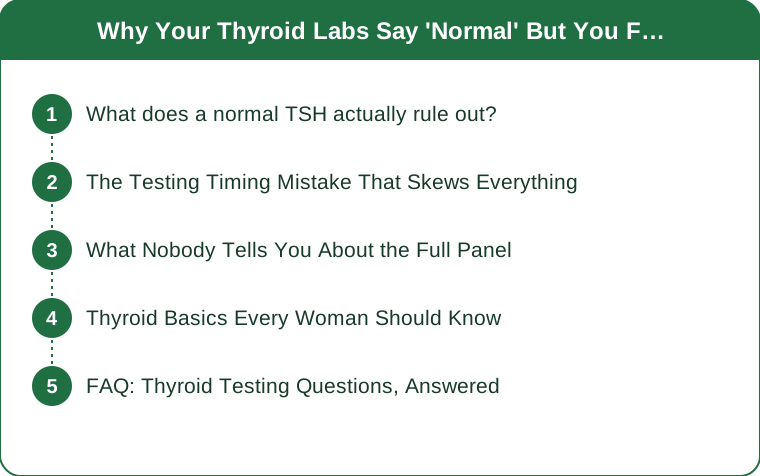
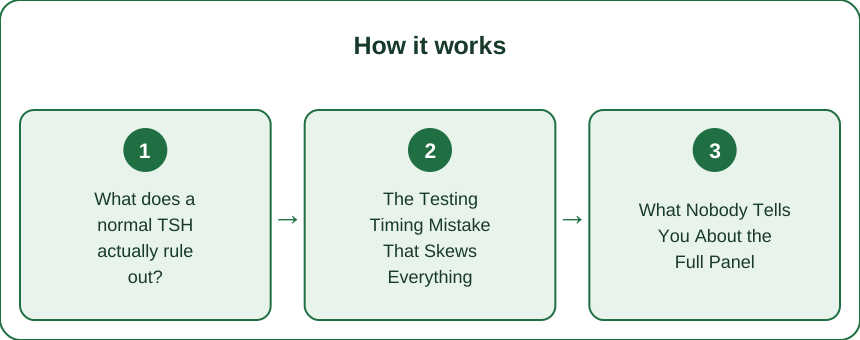
What does a normal TSH actually rule out?
TSH (thyroid-stimulating hormone) measures the signal your pituitary sends to your thyroid — it’s an indirect measure, not a direct one. A number inside the reference range mostly rules out overt hypothyroidism or hyperthyroidism.
What it doesn’t fully capture: how well your body converts T4 into the active T3 hormone your cells actually use, or whether antibodies are quietly attacking your thyroid tissue years before TSH moves outside range.
The Testing Timing Mistake That Skews Everything
TSH fluctuates through the day — it’s typically highest in early morning and can shift meaningfully by afternoon. A test drawn at 3pm can read differently than the same blood drawn at 8am, sometimes enough to push a borderline result into the ‘normal’ column.
If your labs were drawn at a random time of day, ask for a repeat fasting, early-morning draw before concluding anything about the number.

What Nobody Tells You About the Full Panel
A truly informative thyroid workup usually includes 4 markers, not 1: TSH, Free T4, Free T3, and TPO antibodies. Most standard physicals only run TSH.
Here’s what that misses: it’s possible to have a technically-normal TSH while Free T3 sits at the low end of range and TPO antibodies are elevated — a pattern some clinicians call subclinical or early autoimmune thyroid activity. Symptoms can appear well before TSH itself moves.
Thyroid Basics Every Woman Should Know
Thyroid conditions run 5-8 times more common in women than men, and autoimmune thyroid disease (Hashimoto’s) often develops gradually over years before labs cross a diagnostic threshold.
Common symptom clusters worth tracking with dates, not just remembering vaguely: fatigue that sleep doesn’t fix, cold intolerance, hair thinning, unexplained weight shifts, and mood changes. A symptom log with dates is genuinely useful evidence to bring to a follow-up appointment.
FAQ: Thyroid Testing Questions, Answered
What should I ask my doctor for if my TSH is normal but I still feel off?
Request Free T4, Free T3, and TPO antibody testing specifically, plus confirm the draw was fasting and early-morning. Bring a dated symptom log to the appointment.
Can thyroid antibodies be positive with a normal TSH?
Yes — this is a recognized early pattern, sometimes years before TSH shifts. It’s worth monitoring with repeat testing, not dismissing.
How often should thyroid levels be rechecked if symptoms persist?
A common approach is retesting every 6-12 weeks while investigating symptoms, though your clinician should set the interval based on your specific case. This is general information, not medical advice — persistent symptoms deserve an in-person follow-up.
TL;DR:
- A normal TSH alone doesn’t rule out thyroid involvement — it’s one signal, not the full picture
- Ask specifically for Free T4, Free T3, and TPO antibodies, drawn fasting and early morning
- Antibodies can be positive years before TSH itself moves out of range
- Keep a dated symptom log — it’s real evidence, not just a feeling
This is general health information, not medical advice. If symptoms persist despite ‘normal’ labs, a follow-up with the full panel is a reasonable next step, not an overreaction.
Keep Reading
This article is for general informational purposes only and is not medical advice. Always consult a qualified health professional for guidance specific to you.