Getting Your Thyroid Tested: The Labs, the Numbers and the Conversation With Your Doctor
The thyroid test is cheap, common and frequently mis-navigated — the wrong panel ordered, the borderline result shrugged off, the symptoms dismissed — and a little literacy transforms the conversation. The thyroid-testing guide: the signals, the labs and the appointment.

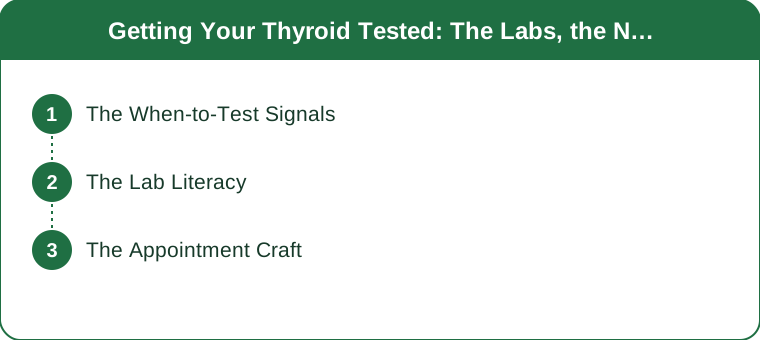
The When-to-Test Signals
Who should ask: the symptom clusters (the fatigue-cold-weight-and-hair pattern from the thyroid doctrine — the constipation, dry skin and low mood additions; the hyper-direction cluster: the racing heart, heat intolerance, unexplained loss and anxiety), the life-stage triggers (the postpartum period being a classic onset window — the postpartum thyroiditis under-recognition; the perimenopause overlap: the symptoms mimicking each other per the menopause doctrine; the testing that sorts them), the family-history factor (the thyroid conditions clustering in families — the autoimmune-history relevance), the routine-screening honesty (the universal-screening debates — the symptomatic-and-at-risk testing being uncontroversial; the ask-for-it legitimacy per the advocacy doctrine), and the retest rhythms (the borderline results rechecked in 6-12 weeks — the single-test snapshot honesty: the TSH varying by illness, stress and time of day).

The Lab Literacy
Understanding the panel: the TSH foundation (the screening standard — the pituitary’s thermostat signal; the HIGH TSH meaning UNDERactive thyroid being the counterintuitive inversion worth memorizing), the free-T4 addition (the actual-hormone level — the TSH-plus-T4 pair painting the picture; the free-T3 conversations for the persistent-symptoms cases), the antibody tests (the TPO antibodies identifying autoimmune Hashimoto’s — the cause named even when levels are borderline; the antibody-positive-normal-TSH monitoring path), the reference-range nuance (the ‘normal’ range being wide — the optimal-versus-in-range debates; the symptoms-plus-borderline results deserving the conversation, not the shrug per the advocacy doctrine), the subclinical territory (the mildly-elevated-TSH-normal-T4 zone — the treat-or-monitor decision factors: the symptoms, antibodies and pregnancy plans; the shared-decision framing per the medical doctrine), and the test-conditions notes (the morning draws for consistency — the biotin-supplement interference warning: the biotin paused before testing per the supplement doctrine).
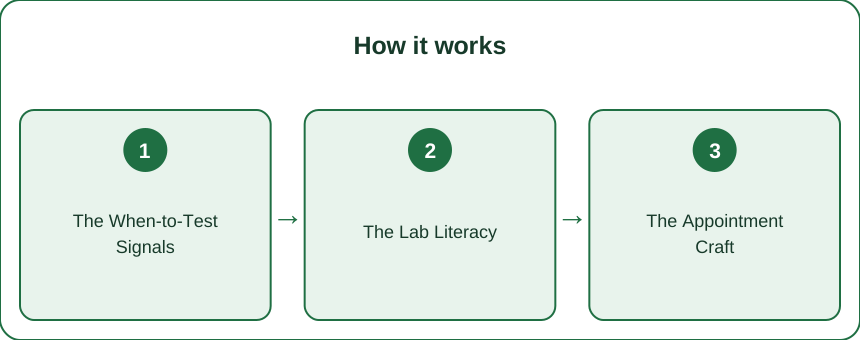
The Appointment Craft
Making the conversation work: the preparation kit (the symptom log with duration-and-severity from the tracking doctrine — the family history noted; the medication-and-supplement list; the question list written per the checkup doctrine), the request scripts (the ‘I’d like my thyroid checked, including TSH and free T4’ specificity — the antibodies asked about with symptoms-plus-family-history; the polite persistence per the advocacy doctrine), the results conversation (the actual NUMBERS requested, not just ‘normal’ — the copy kept; the trend tracked across years per the tracking doctrine; the borderline-with-symptoms follow-up plan negotiated), the dismissal navigation (the symptoms re-stated with impact — the ‘what else could explain these?’ redirect; the second-opinion right per the advocacy doctrine; the women’s-symptoms dismissal pattern named gently), the specialist thresholds (the endocrinology referrals for the complex — the nodules, the pregnancy cases, the hard-to-stabilize), and the closing frame (the thyroid test being one cheap draw away — the literacy converting the five-minute appointment into real answers; the numbers understood, the trend kept, the symptoms respected; the gland, checked properly). Ask for TSH plus free T4, pause biotin first, keep your numbers: the test, navigated with literacy.
Ask for testing with the fatigue-cold-weight-hair cluster, postpartum symptoms or family history — request TSH plus free T4 (high TSH = UNDERactive, memorize the inversion), add TPO antibodies when suspicious, and pause biotin before the draw. Get your actual numbers, not ‘normal’, recheck borderlines in 6-12 weeks, and persist past dismissal.
See It in Motion
Seen here: Maternity Capris with Side Pockets — shop it on bubblelime.com
Keep Reading
This article is for general informational purposes only and is not medical advice. Always consult a qualified health professional for guidance specific to you.