Why Workouts Feel Ten Times Harder With an Underactive Thyroid — It's Not a Motivation Problem
Quick Answer: An underactive thyroid slows cellular metabolism throughout the body, including in muscle tissue, which reduces available energy production, oxygen use efficiency, and recovery speed — meaning the same workout genuinely demands more from a hypothyroid body, and pushing through it like nothing changed can worsen fatigue rather than build fitness.
The workout hasn’t changed. The amount of usable energy your body can produce for it has — and that difference is measurable, not imagined.

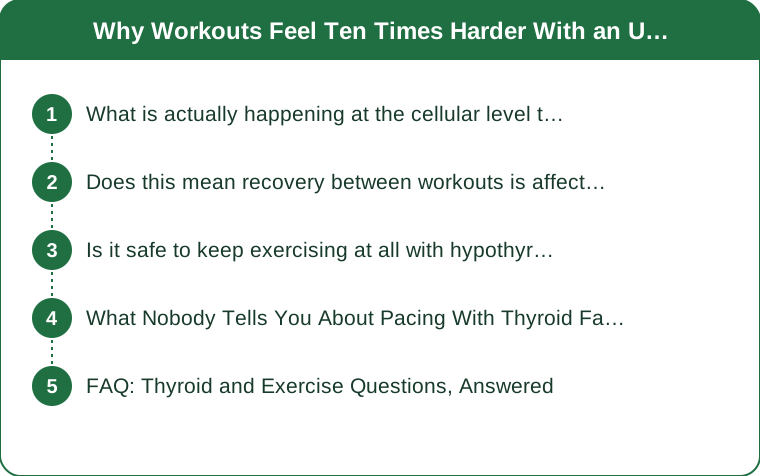
What is actually happening at the cellular level that makes exercise harder?
Thyroid hormone directly regulates metabolic rate in nearly every tissue, including how efficiently muscle cells convert fuel into usable energy. With hypothyroidism, this process slows, meaning muscles have less readily available energy for the same physical demand compared to normal thyroid function.
This isn’t a vague ‘low energy’ feeling — it reflects a genuine reduction in cellular energy production capacity that shows up directly during exercise.
Does this mean recovery between workouts is affected too, not just the workout itself?
Yes — slowed metabolism also affects tissue repair and recovery speed, meaning muscle soreness and fatigue from a given workout can both hit harder and last longer with untreated or undertreated hypothyroidism than the same workout would produce in someone with normal thyroid function.
This is part of why pushing through fatigue with a ‘just work harder’ mindset can backfire — inadequate recovery compounds rather than resolves over successive sessions.

Is it safe to keep exercising at all with hypothyroidism, or should activity be reduced?
For most people with properly managed hypothyroidism (medication-controlled), moderate exercise remains safe and is generally still recommended, since exercise itself has benefits for metabolic and cardiovascular health independent of thyroid status.
The key adjustment isn’t stopping exercise — it’s recalibrating expectations and intensity to match current capacity rather than a pre-diagnosis baseline, and working with a doctor on medication management if fatigue remains severe despite treatment.
What Nobody Tells You About Pacing With Thyroid Fatigue
Most general fitness advice assumes a consistent baseline capacity day to day, but thyroid-related fatigue can genuinely fluctuate based on medication timing, recent lab levels, and other factors — meaning a workout that felt manageable last week may need to be scaled back this week without that being a discipline failure.
Building flexibility into a workout plan (having an easier backup version of each session) tends to work far better for hypothyroid fatigue than a rigid plan that assumes identical capacity every session.
FAQ: Thyroid and Exercise Questions, Answered
How long after starting thyroid medication does exercise typically start feeling more normal?
Many people notice improvement within 6-8 weeks of reaching a stable, effective medication dose, though individual timelines vary.
Should workout intensity be reduced permanently with hypothyroidism?
Not necessarily — once medication stabilizes thyroid levels, many people return close to their prior exercise capacity; ongoing fatigue despite treatment is worth discussing with a doctor.
Is strength training or cardio better tolerated with hypothyroidism?
Both can be appropriate; starting with lower-intensity versions of either and progressing gradually as energy allows tends to work better than jumping back to pre-diagnosis intensity levels immediately.
This is general information, not medical advice — work with your doctor on thyroid management alongside any exercise changes.
TL;DR:
- Hypothyroidism slows cellular energy production in muscle tissue, genuinely increasing workout difficulty
- Recovery and soreness are also affected, not just the workout itself
- Moderate exercise remains safe and beneficial with properly managed hypothyroidism
- Flexible, capacity-matched pacing works better than a rigid plan assuming constant baseline energy
The extra difficulty is real physiology, not a lack of effort — pacing around it, not fighting through it, is the more effective approach.
Keep Reading
This article is for general informational purposes only and is not medical advice. Always consult a qualified health professional for guidance specific to you.